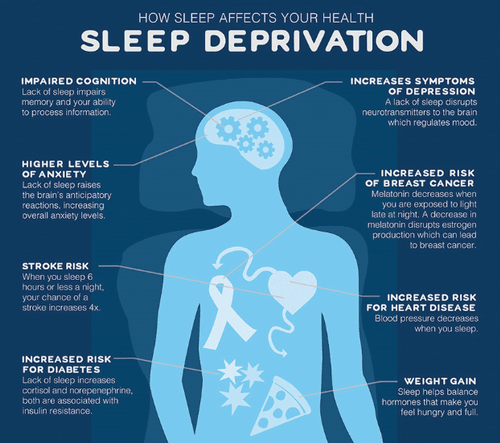
Sleep is extremely important for both physical and mental health. It’s often overlooked as a vital component for the overall well being. Without an adequate amount of sleep, the body is more susceptible to negative health risk factors. Females are more likely to experience sleep disorders than males. It affects more than 1 in every 4 women, in the United States but fewer than 1 in 5 men. Research has shown that women may require more sleep than men to recover from the day and without it women become more susceptible to negative health risks. According to research, men who get adequate sleep, live about five years longer and for women it’s two years longer. However, about a third of adults, cut their sleep short, raising their risks of heart attacks, dementia, diabetes among other health conditions. Older adults, physical and mental illness health are the ones who mainly suffer from insomnia. Also groups with lower socioeconomic states report less sleep duration and lower sleep quality. In addition about half of all adults over the age of 65 have a type of sleep disorder. Most adults need between 7-9 hours of sleep per night to obtain optical health and well being. Individual sleep may vary and some people function with slightly less sleep.
Why Is Sleep So Essential:
1. Physical Health
- Body repair and restorative.
- Disease prevention.
- Metabolism and weight management.
- Immune system support.
2. Mental and Cognitive Function.
- Memory learning.
- Mood and emotional regulation.
- Focus and concentration.
- Brain health.
3. Daily Function.
- Energy levels.
- Performance.
- Safety.
General Recommendations by Age:
- Infants: 14-17 hours.
- Toddlers: 11-14 hours.
- Pre Schoolers: 10-13 hours.
- Teenagers: 8-10 hours.
- Adults: 7-9 hours.
- Older Adults: 7-8 hours.